Photo: Zhang Zhang, CC BY-SA 4.0, via Wikimedia Commons
Photo: Zhang Zhang, CC BY-SA 4.0, via Wikimedia Commons
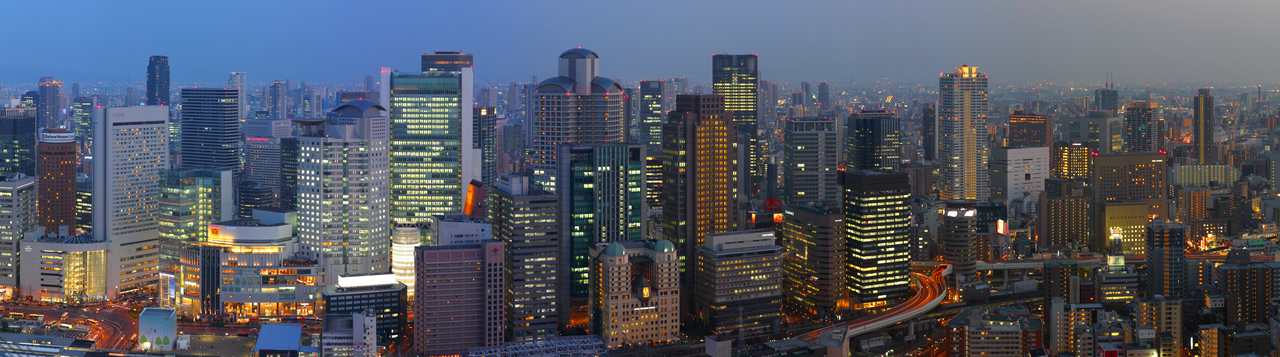
Osaka is Japan's third-largest city and its most unpretentious — a merchant city that has always measured itself in appetites rather than monuments. In the Edo period it was nicknamed 'tenka no daidokoro,' the nation's kitchen, the trading hub where the country's rice, produce and goods changed hands. That commercial soul survives in the local creed of 'kuidaore' — eat until you drop — and in streets where the food is the sightseeing.
The city's landmarks read like a history of Japan in miniature. Osaka Castle, first raised by Toyotomi Hideyoshi in 1583, anchors a vast park of moats and stone walls; the current five-story tower is a 1931 concrete reconstruction housing a history museum. In the south, the Dotonbori canal — dug between 1612 and 1615 — cuts through the neon heart of Minami, where giant illuminated signs for crab, octopus and the famous Glico Running Man hang over the water. For older Japan, Sumiyoshi Taisha and Shitenno-ji rank among the country's most ancient shrines and temples.
Osaka is really two cities in one: Kita, the business and shopping district around Umeda with its striking Sky Building, and Minami, the entertainment quarter around Namba and Dotonbori. Both are dense, walkable and connected by one of Japan's best subway networks. Locals are famously direct and funny, the street food is cheap and superb, and the city makes an ideal base — Kyoto, Kobe and Nara are all within an hour.
Population: 2,816,247 (2025).
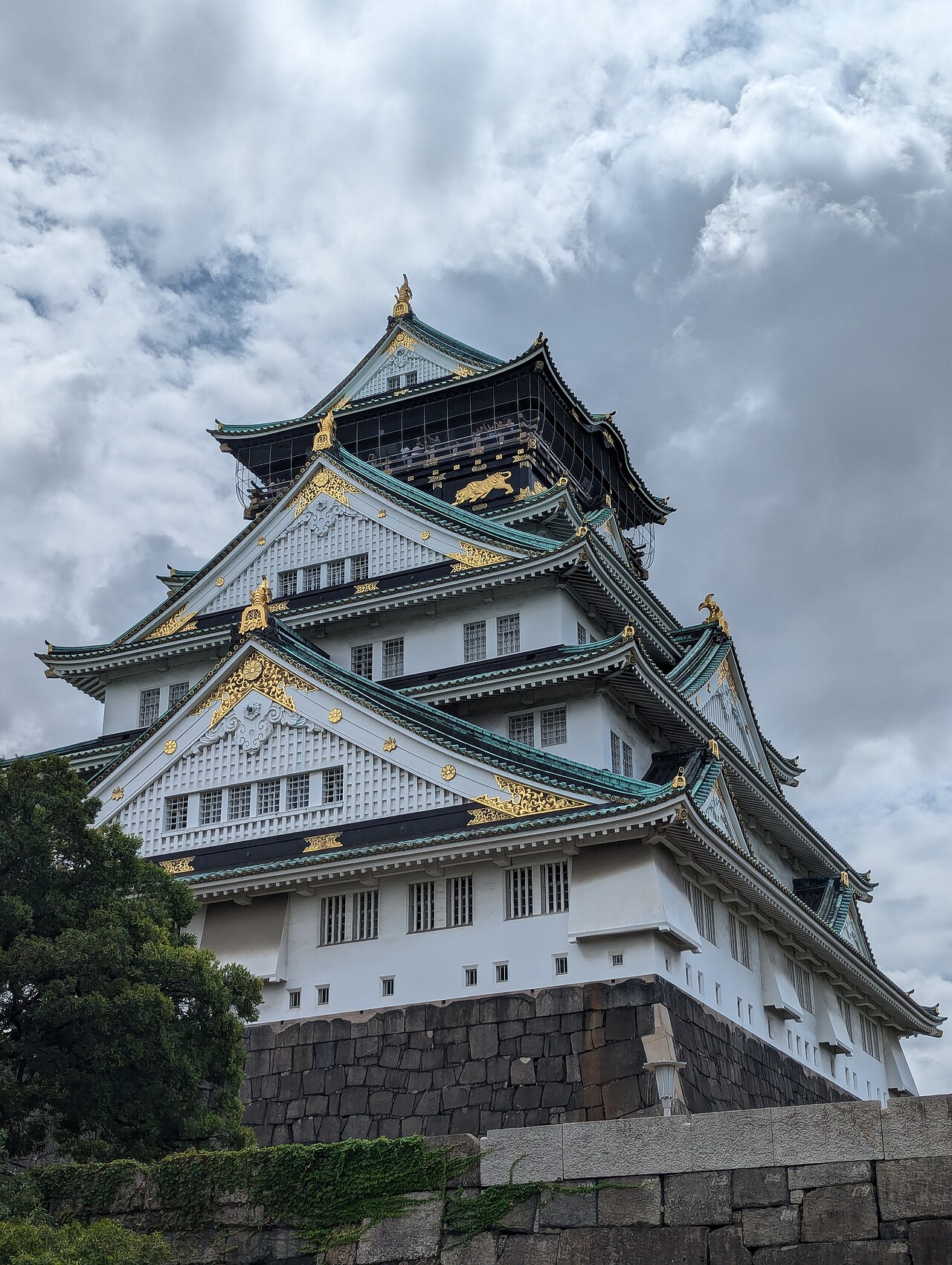
Photo: Takipoint123, CC BY-SA 4.0, via Wikimedia Commons
1-1 Osakajo, Chuo-ku, Osaka 540-0002
First built by Toyotomi Hideyoshi in 1583 and rebuilt several times since, Osaka Castle's current five-story main tower is a 1931 ferroconcrete reconstruction housing a museum on Hideyoshi and the castle's history. The surrounding park, ringed by massive original stone walls and moats, holds some 3,000 cherry trees and is one of Japan's great hanami spots.
Category: Landmark
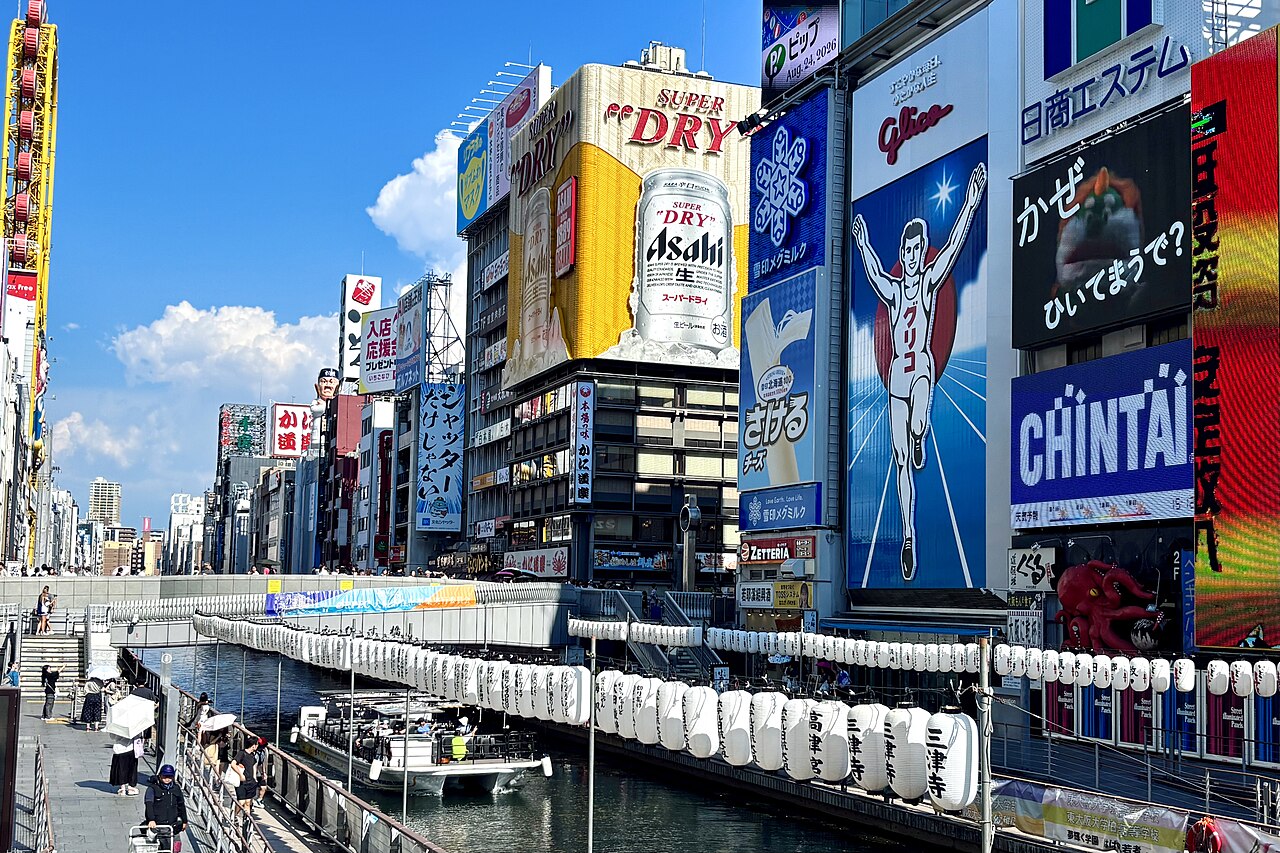
Photo: Sakai Yayoi, CC0, via Wikimedia Commons
Dotonbori, Chuo-ku, Osaka 542-0071
The canal-side entertainment district that is Osaka's neon soul. The canal was dug between 1612 and 1615; today its banks are lined with restaurants and giant illuminated signs — the Kani Doraku crab, the Kuidaore Taro clown, and the Glico Running Man overlooking Ebisu Bridge. Come after dark, when the whole strip lights up.
Category: Landmark
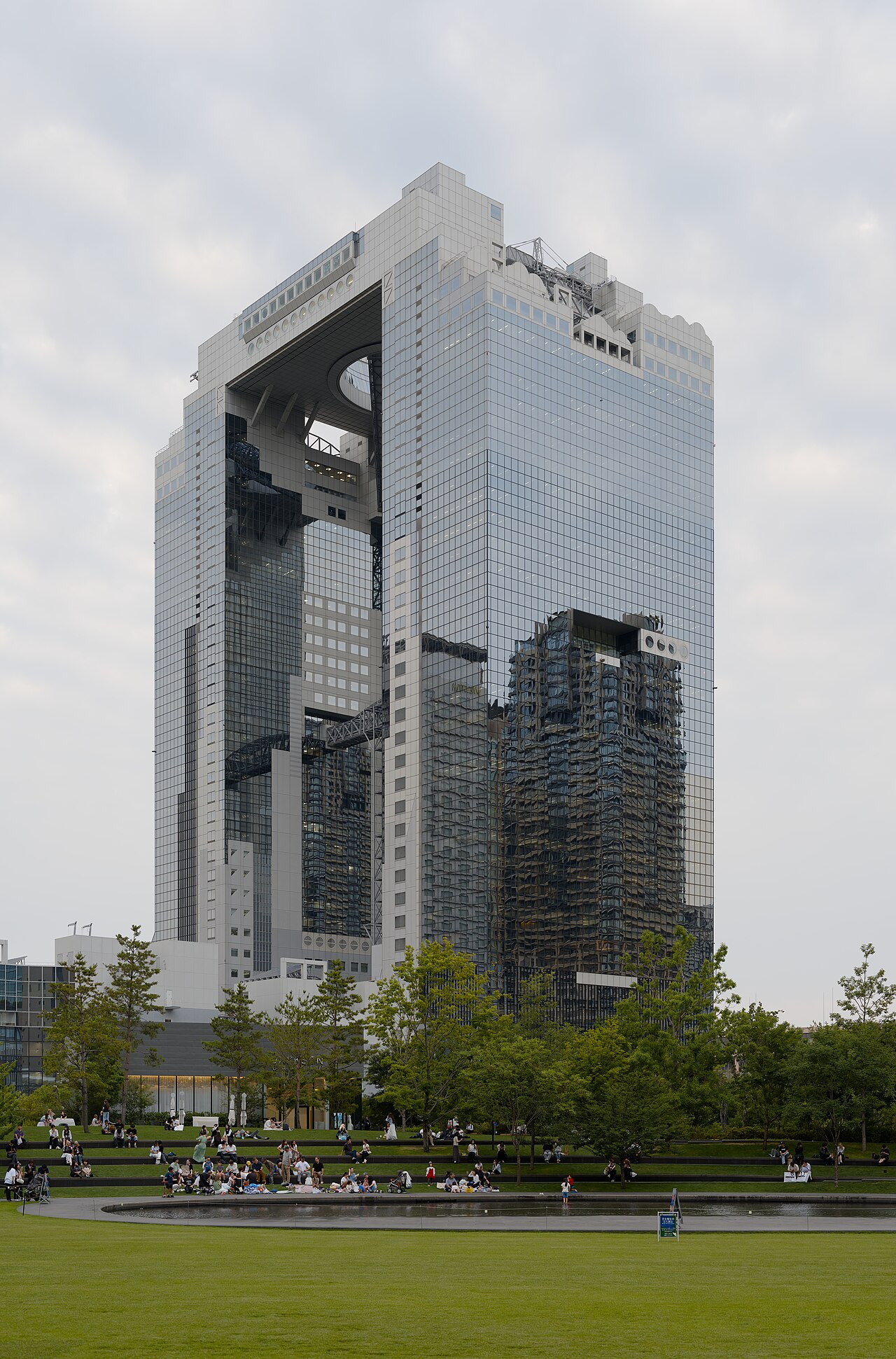
Photo: Daniel Lu (User:dllu), CC BY-SA 4.0, via Wikimedia Commons
1-1-88 Oyodonaka, Kita-ku, Osaka 531-0076
Two 40-story towers joined at the top by the Floating Garden Observatory, a rooftop deck 173 metres up with open-air views across the city to Osaka Bay. Completed in 1993, the building is Umeda's most recognizable landmark; the observatory level also holds restaurants and shops.
Category: Landmark
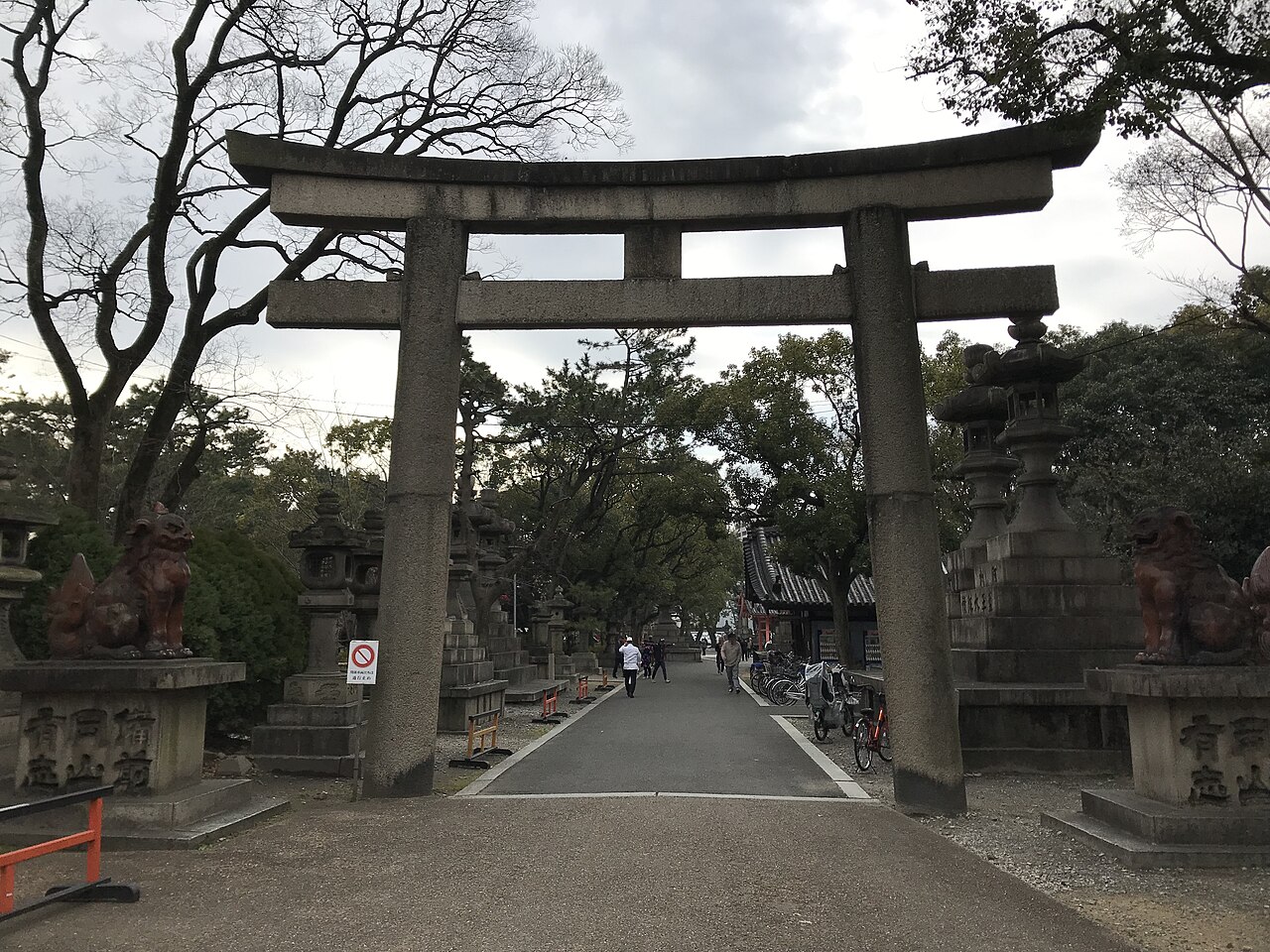
Photo: そらみみ, CC BY-SA 4.0, via Wikimedia Commons
2-9-89 Sumiyoshi, Sumiyoshi-ku, Osaka 558-0045
The head shrine of more than 2,300 Sumiyoshi shrines nationwide, with tradition dating its founding to 211 AD. Its four main halls are built in the ancient Sumiyoshi-zukuri style — one of Japan's oldest shrine architectures — and the arched Sorihashi bridge over the pond is its most photographed feature.
Category: Shrine
1-11-18 Shitennoji, Tennoji-ku, Osaka 543-0051
Founded in 593 by Prince Shotoku and regarded as Japan's oldest officially administered Buddhist temple. The central garan lines up the five-story pagoda, main hall and lecture hall in the classic 6th-century layout, though the buildings themselves have been rebuilt over the centuries. The grounds are free to wander; the inner precinct and treasure house have admission.
Category: Temple
Batter-and-octopus balls griddled in dimpled pans, invented in Osaka in 1935. Sold from street stalls across the city — Dotonbori has the densest concentration.
Osaka-style okonomiyaki mixes batter, cabbage and toppings together before grilling, distinct from Hiroshima's layered version. Diners often cook it themselves on the tabletop griddle.
Skewers of meat and vegetables, breaded and deep-fried, born in the Shinsekai district. The iron house rule: no double-dipping in the shared sauce.
Osaka Metro's dense subway network and the JR Osaka Loop Line cover the center; an IC card handles all of them. Kita (Umeda) and Minami (Namba/Dotonbori) are each compact, flat and walkable districts.
| City | Distance |
|---|---|
| Kobe | 28.1 km |
| Kyoto | 42.9 km |
| Nagoya | 136.5 km |
| Hiroshima | 281.2 km |
| Yokohama | 385.5 km |
| Tokyo | 392.4 km |
Looking for live events, festivals, markets and gigs? Dayfari tracks what's happening in Osaka as it's announced:
Got the itinerary — now the logistics. These are established booking sites; you'll finish your booking on the partner's site.
Flying in? Search live fares to Osaka (KIX) on Kiwi — it stitches together airlines and routings most search engines miss.
Land and go. Pre-book a private driver from the airport to your hotel with GetTransfer — fixed price agreed up front, no taxi queue.
Want something to book? Browse top-rated tours, day trips and things to do in Osaka on Klook.
Riding the rails? A Japan Rail Pass pays for itself fast on the shinkansen — order it on Klook before you fly.
Skip the ticket-office line — book timed entry and attraction tickets for Osaka on Tiqets.
If you book through these links, Dayfari may earn a commission at no extra cost to you.
Take Dayfari with you
The free Dayfari app puts every event, reminder and road-trip stop in your pocket.
Own a business in Osaka? List it on Dayfari free →
Hosting something? Submit your event free →
One short email every Thursday with the weekend’s best events in Osaka. No spam, unsubscribe anytime.
We’ll email you a confirmation link first — no confirmation, no emails.
Get the Dayfari app
Your weekend in your pocket — save events, get reminders, plan road trips.