Travel guide
Reims travel guide
Reims is the champagne capital of France and the city where twenty-five French kings were crowned. A Gothic cathedral with a thousand years of royal history, 250 km of chalk cellars full of aging champagne beneath the streets, and a compact center made for walking - this is the complete Dayfari guide, researched October 2026.
Photo: Yann Grossel, CC BY-SA 3.0, via Wikimedia Commons
The coronation city
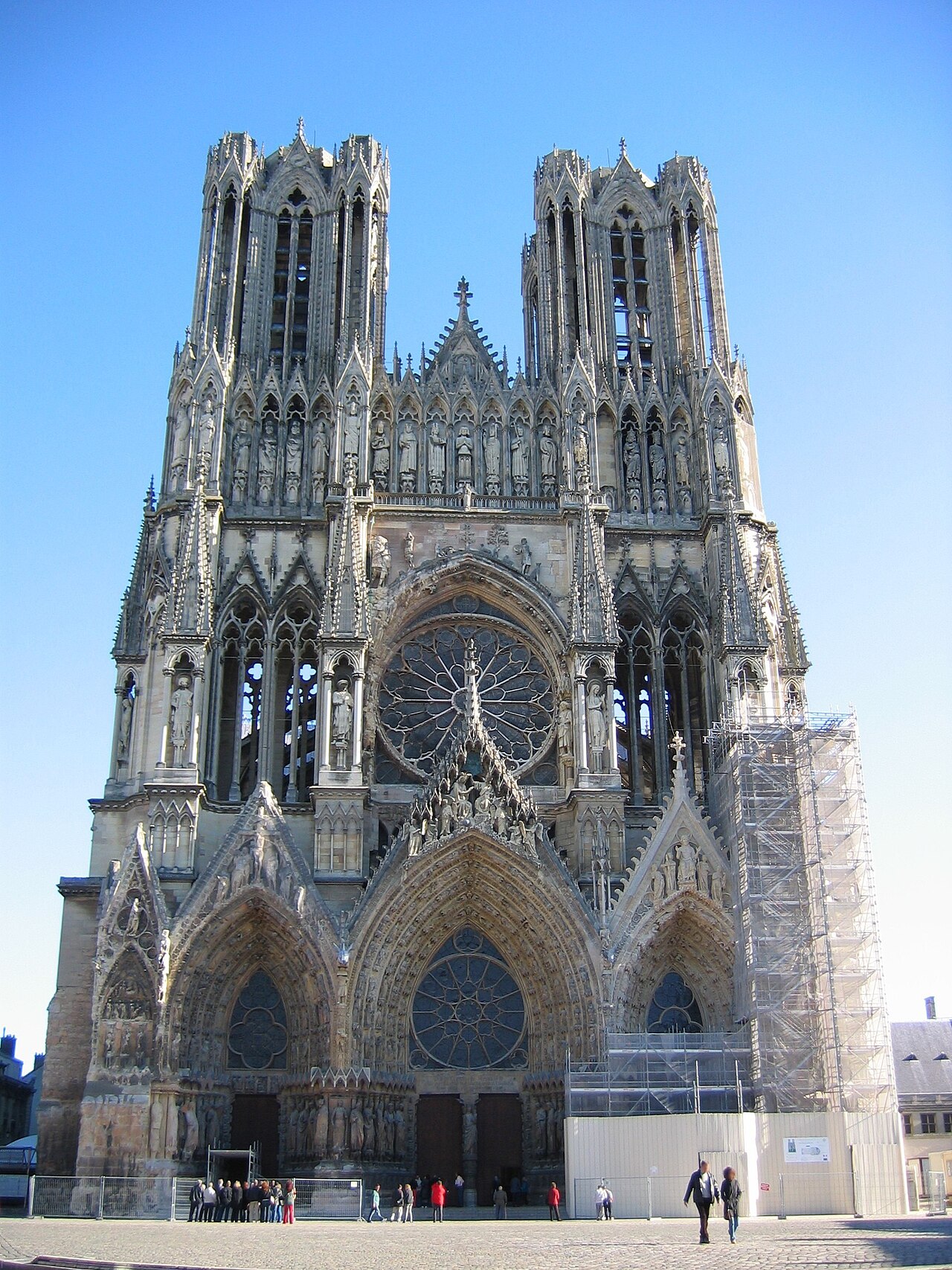
Reims is the champagne capital and one of France's most storied cities. For over a thousand years it was the coronation city of the French monarchy — twenty-five kings were crowned in its Gothic cathedral, starting with Clovis I, who was baptized here by Saint Remi in 496 AD. That deep royal history sits side by side with a working, unpretentious city of about 180,000 people that still makes, drinks, and sells more champagne than anywhere else on earth.
Two UNESCO listings
The city wears its history openly. The Cathédrale Notre-Dame de Reims, the Palais du Tau, and the former Abbey of Saint-Remi form a UNESCO World Heritage ensemble, and the Roman Porte Mars still stands where it was built in the 3rd century. Below the streets, some 250 km of chalk cellars — the crayères — hold millions of bottles of champagne aging in the dark, part of a second UNESCO listing that covers the Champagne hillsides, houses, and cellars.
A city made for enjoying
Reims is also an easy city to simply enjoy. The compact center is made for walking, with the long pedestrian Place Drouet-d'Erlon filling up with café terraces in good weather. Big-name champagne houses — Veuve Clicquot, Taittinger, Pommery, Ruinart — open their cellars to visitors, and the high-speed TGV from Paris Gare de l'Est reaches Reims in about 45 minutes, so the city works as well as a day trip or as a base for the whole Champagne region.
Reims in five facts
Coronation city
Twenty-five French kings were crowned in Reims cathedral, from Clovis I's baptism in 496 to the coronation of Charles X in 1825.
UNESCO, twice over
The cathedral, Palais du Tau, and former Abbey of Saint-Remi were listed in 1991; the Champagne hillsides, houses, and cellars followed in 2015.
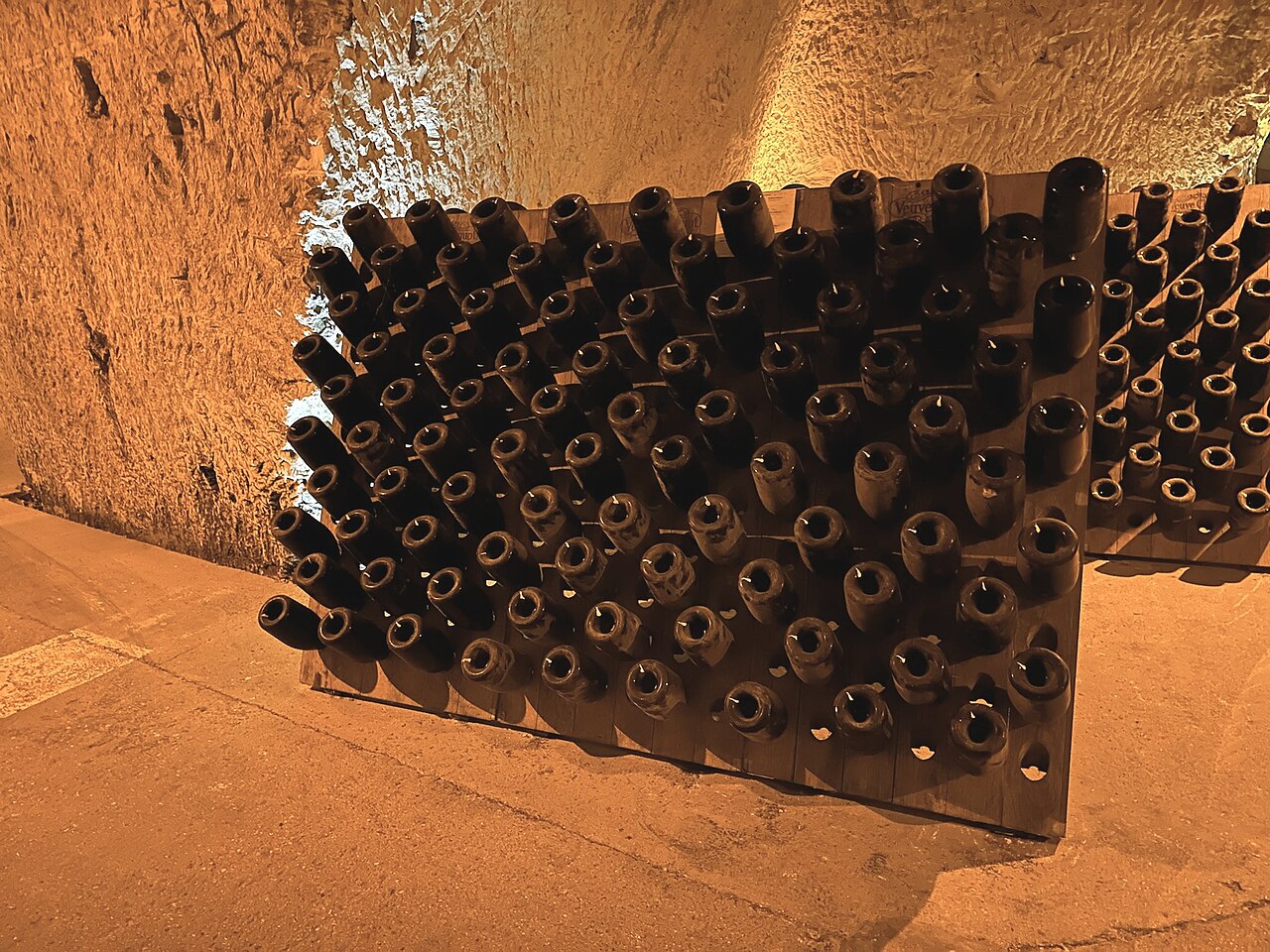
Photo: Cynwolfe, CC BY-SA 4.0, via Wikimedia Commons

The crayères
Some 250 km of chalk galleries lie beneath Reims, dug from Gallo-Roman times onward; several great champagne houses age their bottles down there.
WWI scars
The cathedral was shelled and burned in 1914 during World War I and spent decades under restoration — the scaffolding finally came down in the 2010s.
End of WWII
Germany's unconditional surrender was signed in Reims on 7 May 1945, in what is now the Musée de la Reddition.
What to see
Nine places that earn their spot - every one verified, with its real address:
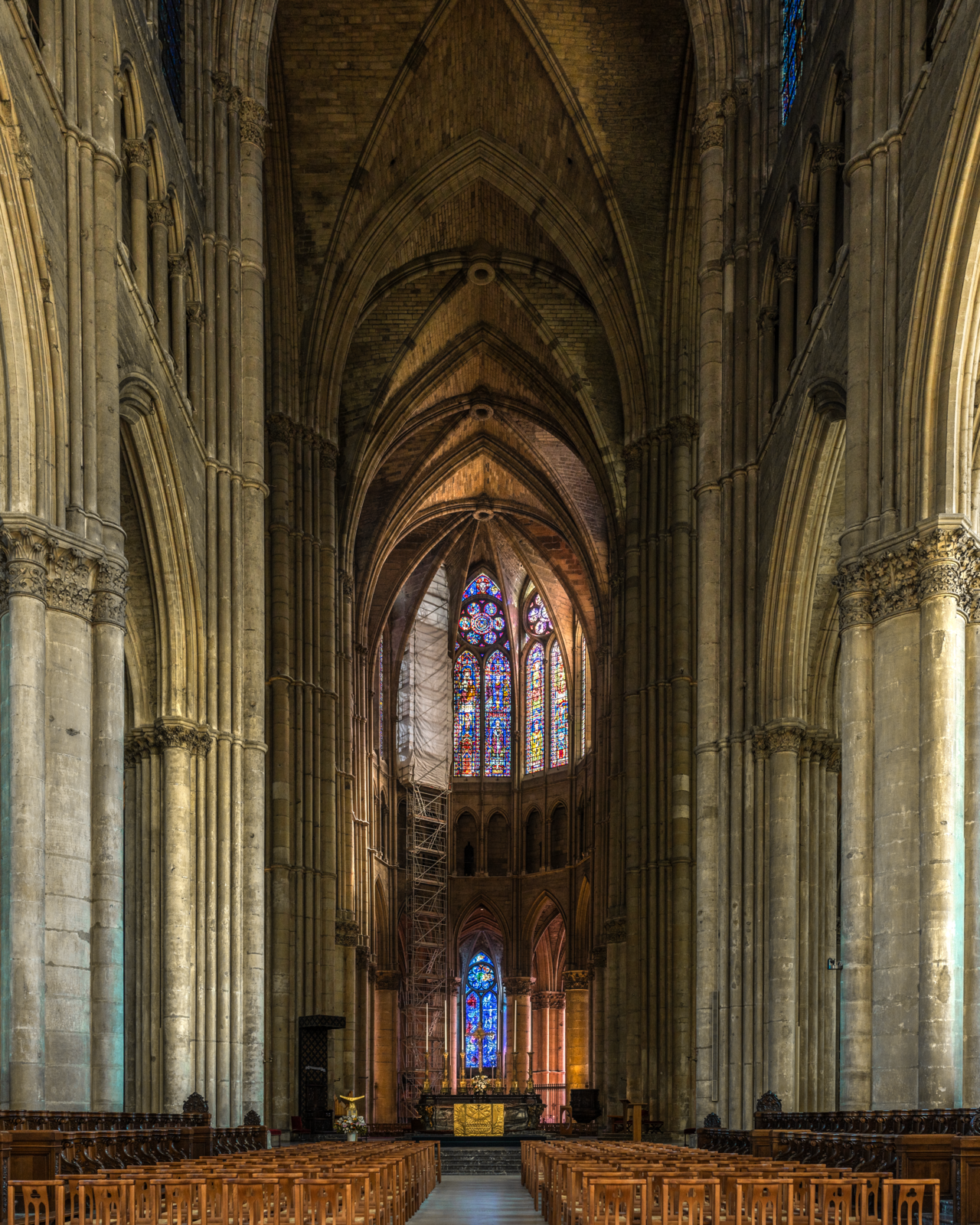
Photo: Gennadii Saus i Segura, CC BY-SA 4.0, via Wikimedia Commons

Cathédrale Notre-Dame de Reims
The great Gothic cathedral where France's kings were crowned for a thousand years. The west facade carries the Gallery of Kings and one of the finest sculptural programs in Europe — look for the Smiling Angel — while inside, stained glass by Marc Chagall fills the apse chapels. Entry is free; guided tower visits run in season.
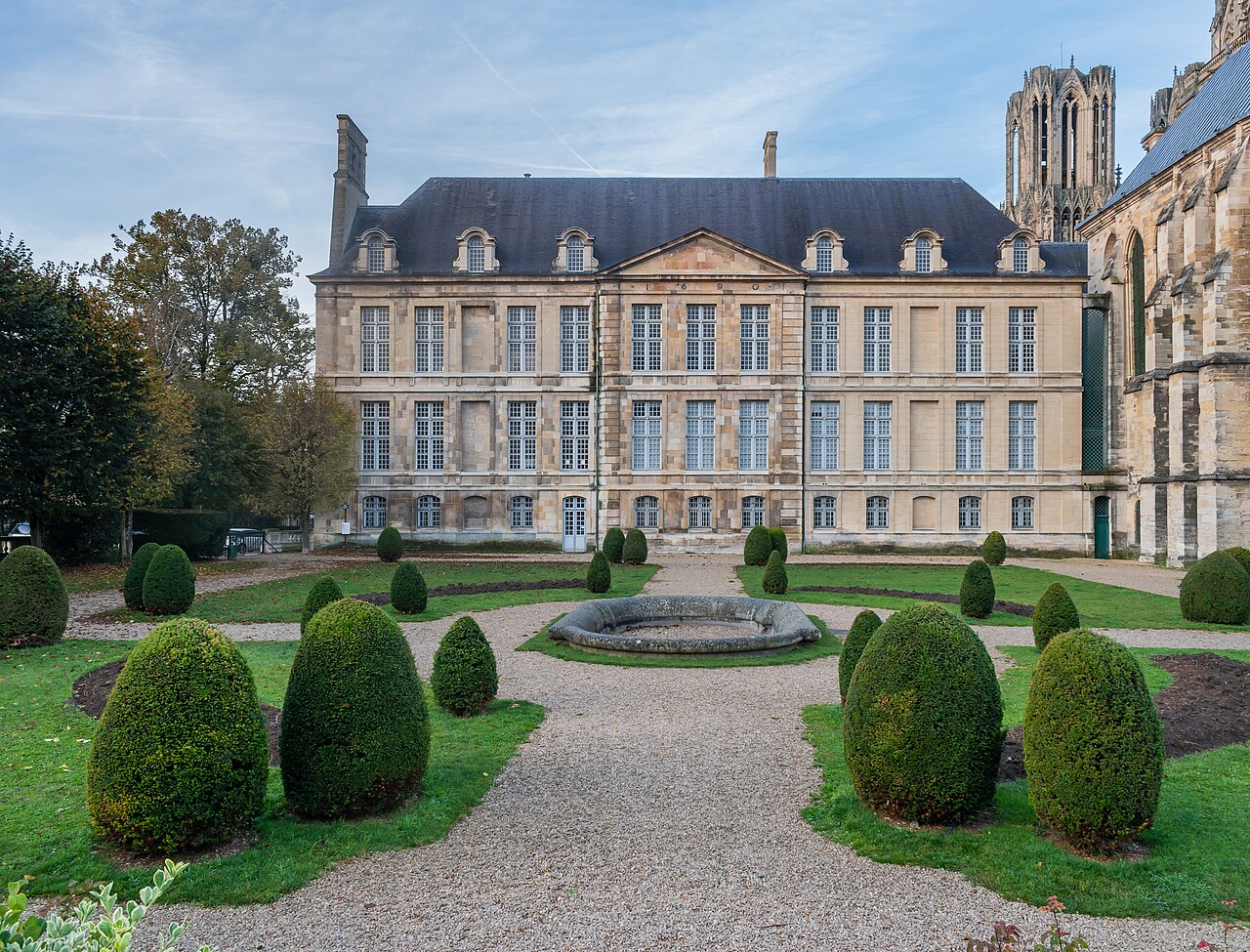
Photo: Tournasol7, CC BY-SA 4.0, via Wikimedia Commons

Palais du Tau
The archbishops' palace beside the cathedral, where coronation banquets were held after the crowning. Today it's the museum of the cathedral's works, with coronation treasures, tapestries, and statuary rescued from the facade.
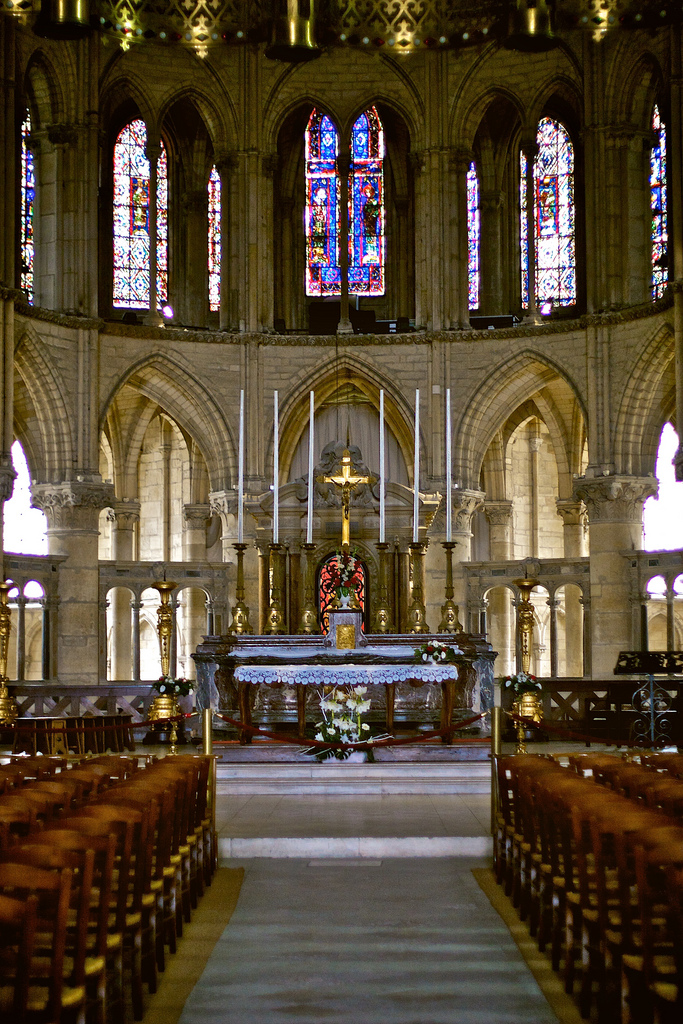
Photo: Tony Bowden, CC BY-SA 2.0, via Wikimedia Commons

Basilique Saint-Remi
The abbey church that holds the relics of Saint Remi, the bishop who baptized Clovis I. Mostly Romanesque with Gothic additions, it's quieter than the cathedral and, in some ways, more atmospheric.
Veuve Clicquot — cellar visit
One of the great champagne houses, open for guided cellar tours through the crayères. Book ahead — slots sell out, especially on weekends. The visit ends with a tasting.
Taittinger — cellar visit
Tours descend into Gallo-Roman chalk pits once used by the monks of Saint-Nicaise Abbey. The Brut Réserve tasting at the end is the house's signature pour.
Pommery — cellar visit
A grand 19th-century estate with extensive crayères, contemporary art installations in the cellars, and a lively tasting room. Good pick if you only do one house.
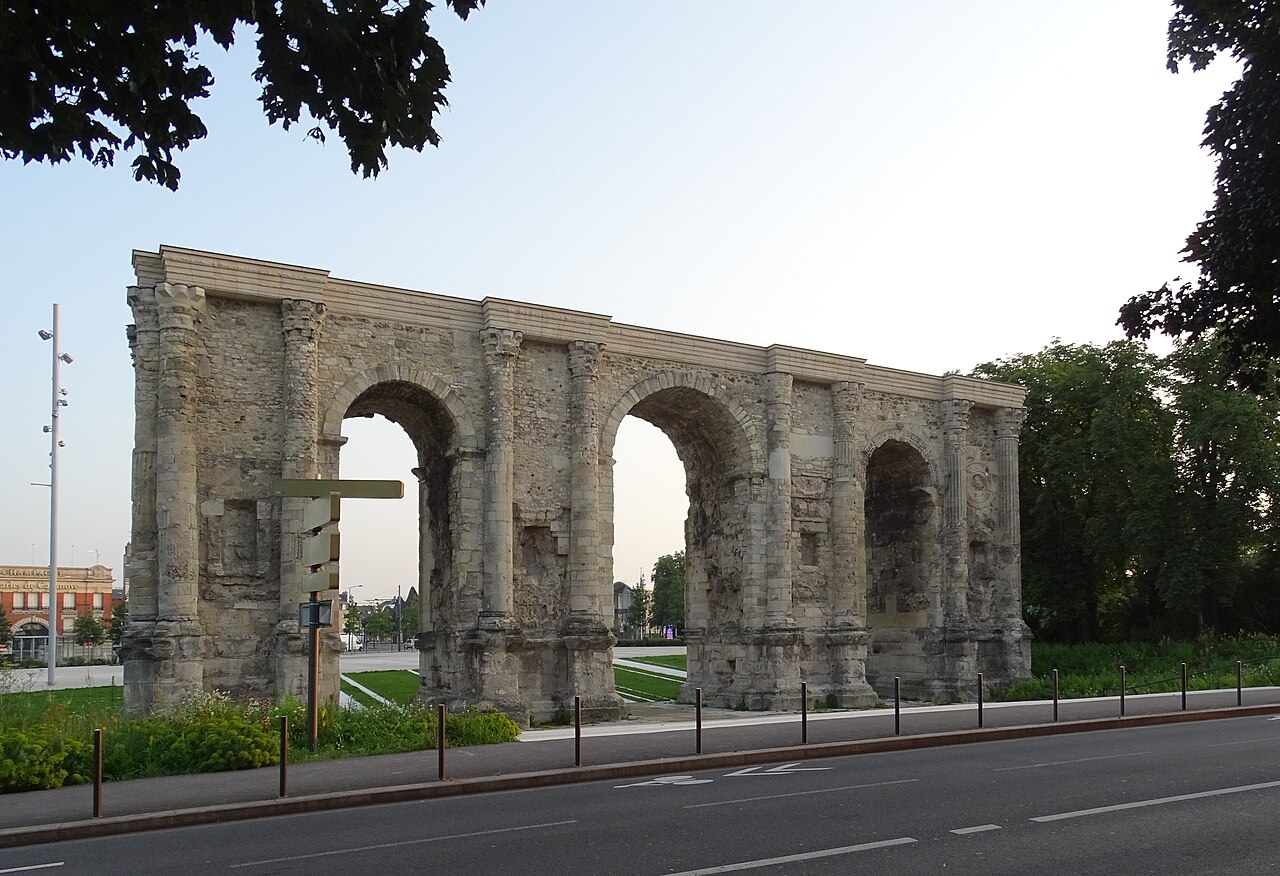
Photo: Ad Meskens, CC BY-SA 4.0, via Wikimedia Commons

Porte Mars
A 3rd-century Roman triumphal arch — the widest of its kind surviving anywhere — standing free in a square on the edge of the old center. You can walk right up to it; it's free and always open.
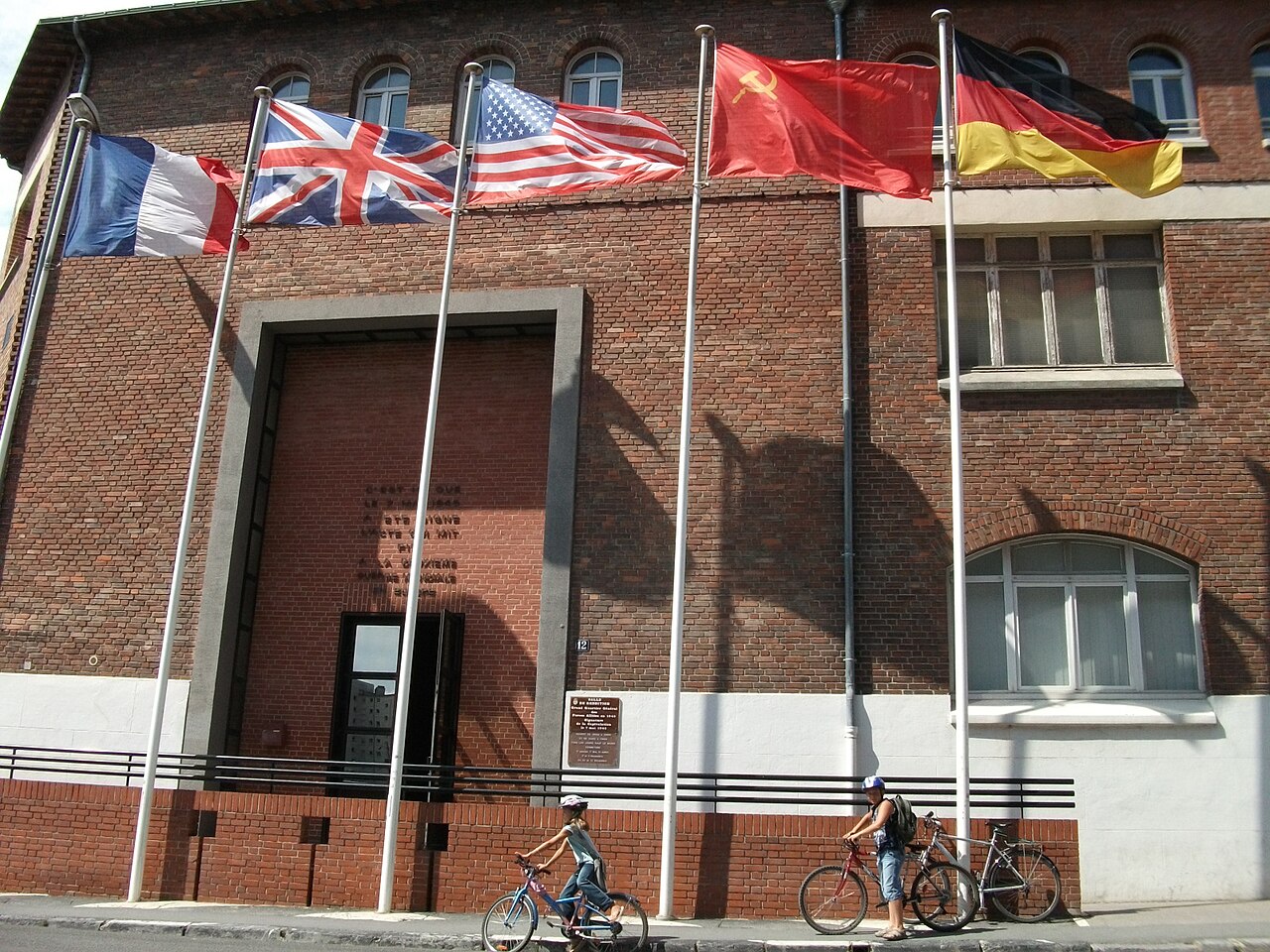
Photo: Gérald Garitan, CC BY-SA 3.0, via Wikimedia Commons

Musée de la Reddition
The schoolhouse-turned-headquarters where the unconditional surrender of Germany was signed on 7 May 1945. The map room is preserved as it was that morning.
Place Drouet-d'Erlon
Reims' long pedestrian main street, lined with brasseries, cafés, and shops. The evening passeggiata-style stroll here is the city's daily ritual in warm weather.
What to eat and drink
Reims has its own edible signatures - and one drinkable one that needs no introduction:
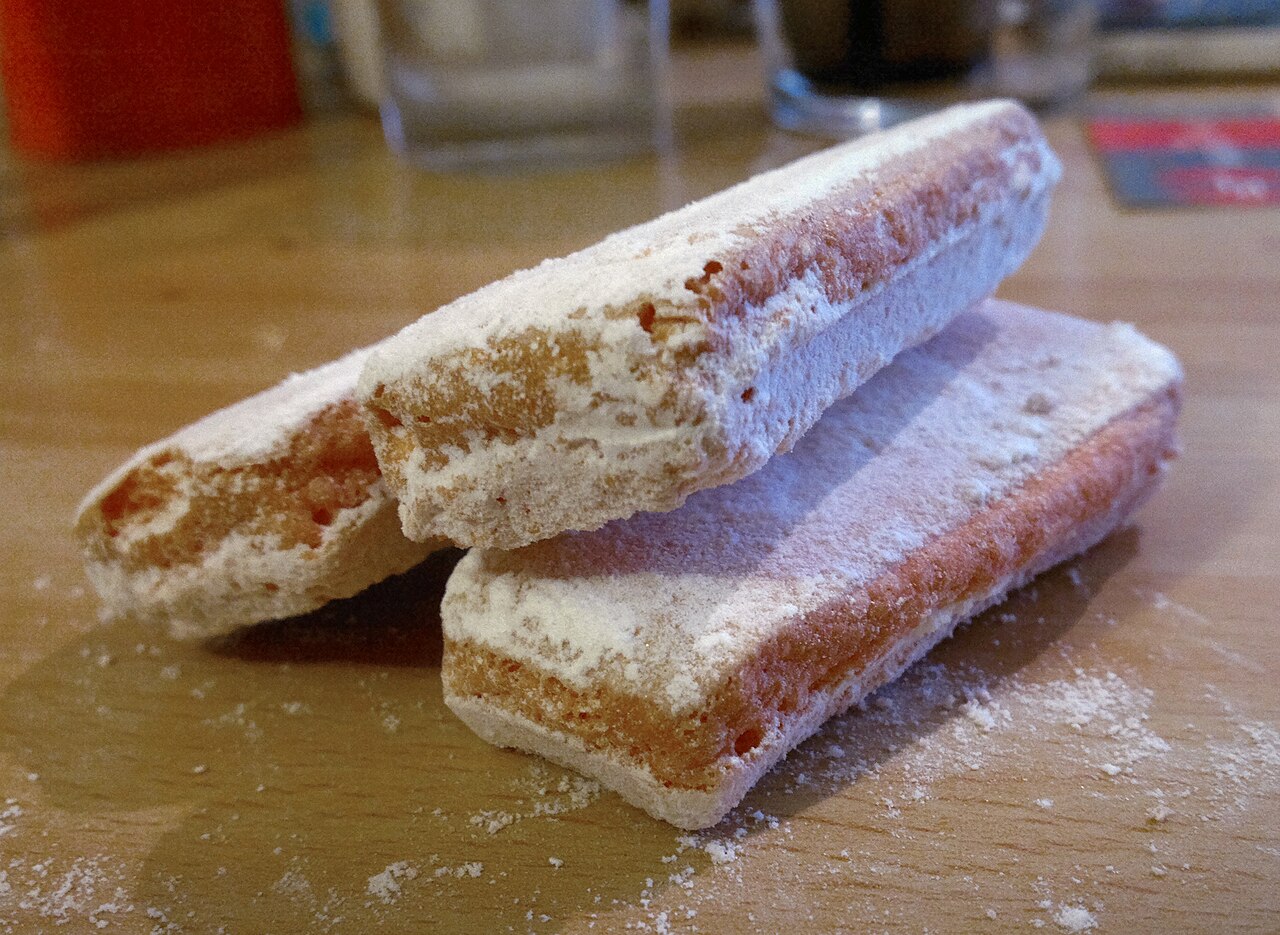
Photo: Cherry, CC BY-SA 3.0, via Wikimedia Commons

Biscuits roses de Reims
The city's signature pink biscuits — crisp, sugar-dusted, and traditionally dunked in champagne. Maison Fossier has made them since 1756.
Jambon de Reims
Ham coated in a champagne-infused jelly and crumb crust, served cold in slices. A fixture of charcuterie boards across the city.
Nonnette
A soft gingerbread-style cake from the region, glazed with orange marmalade — the kind of thing you grab at a bakery for the train home.
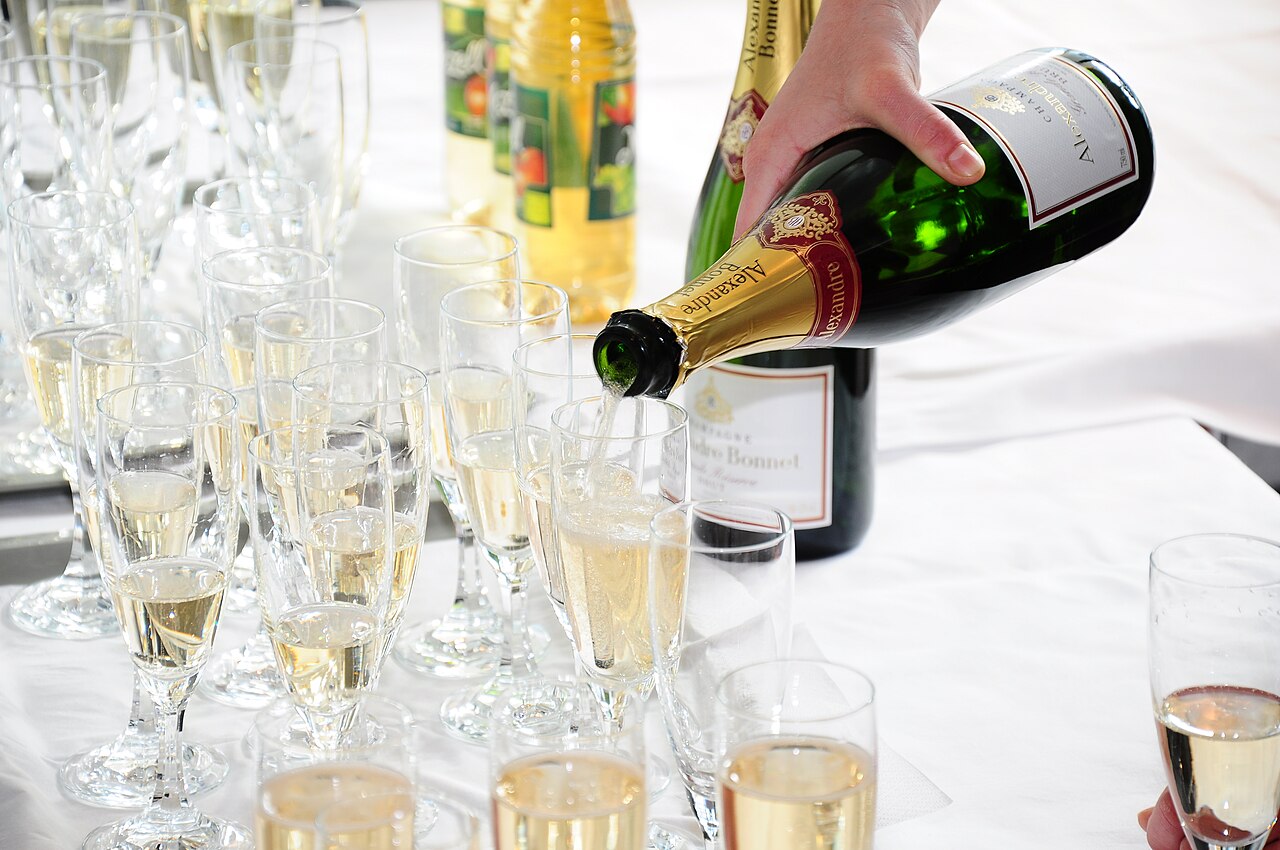
Photo: L.C. Nøttaasen, CC BY 2.0, via Wikimedia Commons

Champagne
Not a dish, but the point of coming: most houses recommend their brut with local cheese or the pink biscuits, and tasting rooms pour vintages you won't find at home.
Getting there and around
Train: The TGV from Paris Gare de l'Est reaches Reims in about 45 minutes, with frequent departures. Reims also has direct TGVs to Charles de Gaulle Airport and onward to Lille and Strasbourg.
Car: The A4 autoroute connects Reims to Paris in about 1h30. Parking is easiest at the edge-of-center lots; the old town itself is best explored on foot.
Air: The nearest major airport is Paris Charles de Gaulle (CDG), about an hour from Reims by direct train. Small Reims Champagne airfield handles private flights only.
The center of Reims is compact and flat — you can walk from the cathedral to most champagne houses in 20 to 30 minutes. The CITURA network runs two tram lines and frequent buses for the rest; a day pass covers both. Biking along the canal towpaths is an easy option in summer.
Good to know
- Book champagne house visits days ahead, not the morning of — the English-language tours sell out first.
- The cathedral is free to enter; go early in the morning for the quietest visit and the best light on the Chagall windows.
- Reims makes an easy day trip from Paris, but staying overnight means the crayères tours and dinner without watching the clock — and the cathedral lit at night is worth seeing.
- Épernay, the other champagne capital, is 30 minutes south by regional train and worth pairing with a Reims stay.
- Many smaller shops close on Sundays; the big champagne houses and the cathedral stay open.
- If you're driving, watch for the vendange (harvest) season in September — villages south of Reims fill up and cellars run special events.
Pair it with
Reims works as a day trip or as a base. Nearby on the Dayfari map: Paris (130 km) Lille (168 km). And Épernay, the other champagne capital, is about 30 minutes south by regional train - worth pairing with a Reims stay.
Common questions
How many kings were crowned in Reims?
Twenty-five French kings were crowned in Reims cathedral, from the baptism of Clovis I in 496 to the coronation of Charles X in 1825.
Is Reims worth a day trip from Paris?
Yes - the TGV from Paris Gare de l'Est takes about 45 minutes. But staying overnight buys you the crayères tours and dinner without watching the clock, and the cathedral lit at night.
What are the crayères?
Some 250 km of chalk galleries beneath Reims, dug from Gallo-Roman times onward. Several great champagne houses age their bottles down there, and the cellars are part of a UNESCO listing.
Do I need to book champagne house visits?
Yes - book days ahead, not the morning of. The English-language tours sell out first, especially on weekends.
What is the biscuit rose de Reims?
The city's signature pink biscuit - crisp, sugar-dusted, and traditionally dunked in champagne. Maison Fossier has made them since 1756.
More to explore in Reims

If you book through these links, Dayfari may earn a commission at no extra cost to you.