Walking & hiking in Jeju
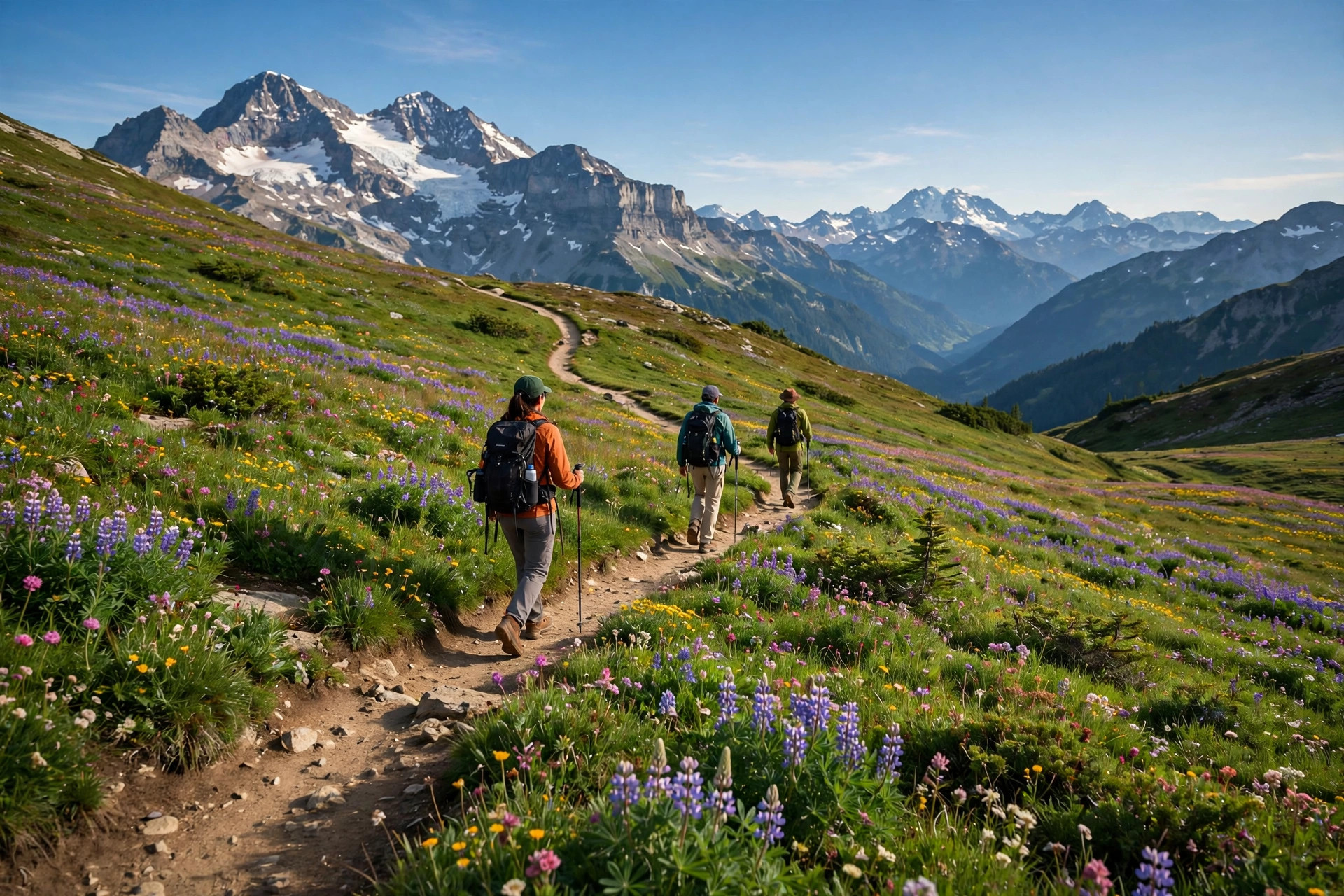

Jeju is a hiker's island wearing a resort's clothes: a 1,947m volcano with a reservation system, ~360 oreum cones you can climb in half an hour, and the Olle Trail network threading it all together. Here's how the trails actually work, from the city outward.
Hallasan: the mountain that defines the island
Hallasan (1,947m) is South Korea's highest mountain, a dormant volcano visible from almost anywhere on Jeju, and the hike the whole island is organized around. Three trailheads sit within easy reach of Jeju City -- two on the north slope, one to the southeast. The rules changed a few years back and they matter: the two summit trails now require a free online reservation, and the daily caps are real.
Seongpanak trail
The classic summit route: 9.6km one way, 8-10 hours round trip, gentler gradient than the alternative, boardwalks through dense forest for the first 7km then steep rock to Baengnokdam crater. Free reservation required at visithalla.jeju.go.kr -- 1,000 hikers a day, weekends sell out. Foreign visitors bring a passport. Start by 7am; the Jindallaebat checkpoint cutoff is 12:30 in spring/autumn.
Gwaneumsa trail
The shorter, steeper summit route (8.7km one way) past the Gwaneumsa temple. Same reservation system, 500 hikers a day. Pick this if you want the harder climb and the temple start; pick Seongpanak for the gentler grade.
Eorimok trail
The no-reservation, no-cutoff-pressure option: a walk-in forest trail to the Witse Oreum junction with some of the best non-summit views in the park. Easiest to reach by bus from the city, and the right call if the summit permits are gone or the weather's marginal. Crampons rentable at Seongpanak in winter -- verify availability before relying on it.
Oreums: the 30-minute volcanoes
Jeju's ~360 oreums (parasitic volcanic cones) are the island's signature half-day hike: 20-40 minutes up, panoramic payoff, free, no permits. Two near the city stand out:
Saebyeol Oreum (새별오름)
The famous one: 519m, a grassy ridge trail, silver grass in autumn, and the sunset spot that fills Instagram every October. 'Dawn star' is the name's meaning. The right-hand course from the parking lot is the easier grade. Also the site of the Jeju Fire Festival (being reorganized since 2025 to de-emphasize the fire).
Geomunoreum (거문오름)
The serious one: a UNESCO World Heritage lava-tube system under a dense, dark forest ('geomun' suggests both darkness and sacredness). Three hiking courses, but daily hiker numbers are capped and reservation is required -- this is the oreum you plan, not the one you wing.
The Jeju Olle Trail through the city
The 400km+ Olle network circles the island in 27 routes, and four of them run through Jeju City's orbit -- the trail system is genuinely the backbone of walking here:
Olle Route 17
Comes down the Musucheon stream valley into the city, past the airport, Yongduam Rock and Yongyeon Bridge. The most urban Olle -- you can walk part of it as a city day hike.
Olle Route 18
Starts at Sanjicheon in the old downtown, climbs past Sarabong and Byeoldobong, then follows the sea east to Sinchon village. The best single-day Olle you can start on foot from downtown.
Olle Route 16
Aewol's coastal-and-inland mix: salt fields, stone-walled villages, farmland, and the Hangpaduri Hangmong historic site (canola in spring, cosmos in fall).
Olle Route 15
Geumsan Park's evergreen forest path is the highlight; the B course hugs the coast. Hallim is at the edge of the 25km radius -- check your transport before committing.
The Jeju Olle Walking Festival (Nov 5-7, 2026, Jocheon Mansae Statue) is the annual celebration -- ~10,000 walkers, 30,000 won general entry -- organized by the Jeju Olle Foundation, which also runs monthly walks year-round.
Before you go
Hallasan weather changes fast and the summit is frequently in cloud -- check the forecast the morning of, not the night before. There is no food or water for sale on the Hallasan trails; pack it all. Daytime hiking only, and the park enforces turn-around times strictly. For oreums: sneakers are fine, but the ridges are exposed -- wind protection matters more than warmth in autumn. October is the sweet spot: silver grass up, temperatures down, crowds manageable except on festival weekends.
Common questions
Do I need a reservation to hike Hallasan?
Only for the two summit trails: Seongpanak (1,000/day) and Gwaneumsa (500/day), booked free at visithalla.jeju.go.kr. Eorimok, Yeongsil and the other non-summit trails are walk-in.
How hard is the Hallasan summit hike?
Seongpanak is a fit beginner's mountain: 9.6km up with a gentle grade for most of it, but it's still 8-10 hours round trip with a steep rocky finish. Good boots and an early start are non-negotiable.
What is an oreum?
A parasitic volcanic cone -- Jeju has around 360 of them. They're small extinct volcanoes, typically a 20-40 minute climb, and the island's signature short hike. Saebyeol Oreum (Aewol) and Geomunoreum (Jocheon) are the two to know near the city.
Which Olle route starts in Jeju City?
Route 17 ends in the old downtown and Route 18 starts there -- together they give you a full day of walking from the city center to the east coast. Route 18 (old downtown to Jocheon, 19.8km) is the classic city-start day hike.
If you book through these links, Dayfari may earn a commission at no extra cost to you.